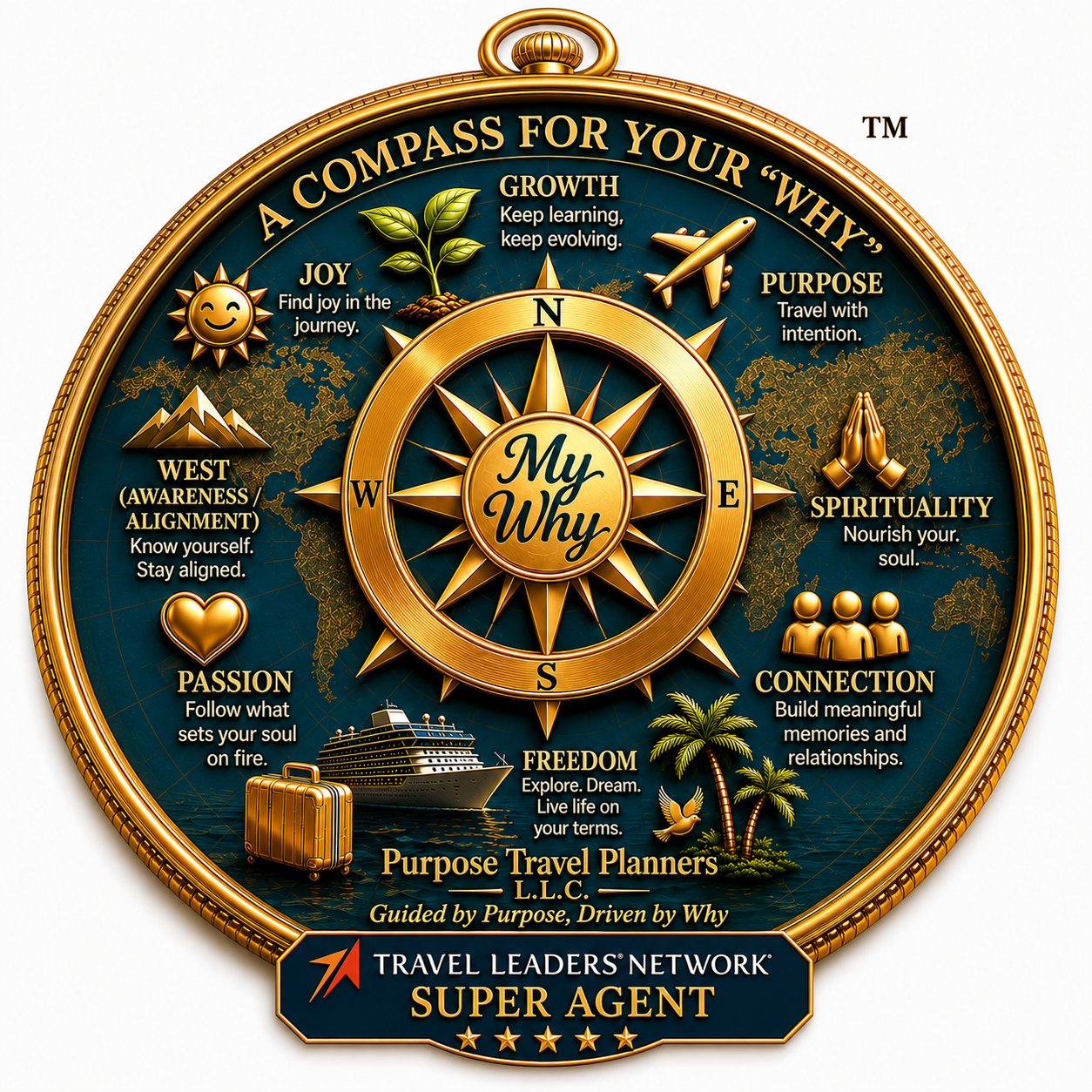

Purpose-driven travel is what happens when the reason for going leads the plan. The destination still matters. The hotel still matters. The budget absolutely still matters. But none of those choices should be floating around without a job to do.
A trip can be beautiful and still feel strangely thin if it never connects to the people taking it. That is why more travelers are asking sharper questions before they book: What do we want to remember? Who needs to feel included? What pace will let us actually enjoy this? What would make the trip feel worth the time, money, and coordination?
That shift is not just a mood. American Express Travel describes travelers as being more intentional about how they spend vacation time in its 2026 Global Travel Trends Report. McKinsey has also found that travelers increasingly plan around specific experiences and authentic local culture, not only around destinations. For families, couples, groups, and travelers with access needs, that changes the planning order. Start with the why, then make the destination earn its place.
This guide is meant to make that first step easier. You do not need a perfect vision board, a finalized guest list, or a locked budget to begin. You need a clear sense of what the trip is supposed to protect, celebrate, restore, or make possible. Once that is clear, the planning conversation becomes less about endless options and more about fit.
What purpose-driven travel really means
Purpose-driven travel is travel designed around a clear intention. Sometimes that intention is personal: rest after a hard season, a milestone birthday, a honeymoon that feels private instead of performative, or a solo trip that rebuilds confidence. Sometimes it is relational: bringing scattered family members together, giving grandparents an easier way to participate, celebrating an anniversary, or creating a shared memory before life changes again.
It can also be spiritual, cultural, educational, service-oriented, or access-centered. A faith-based retreat, heritage trip, cruise with older relatives, accessible resort stay, destination wedding, service trip, sports event weekend, or reunion cruise can all be purpose-driven when the plan is shaped around the reason people are gathering.
Responsible-travel conversations often define purpose through conservation, community impact, and sustainability. American Express Travel, for example, frames purpose-driven travel around aligning choices with values and contributing to the wellbeing of places and people. That is useful, but it is not the whole picture. For everyday travelers, purpose can also mean choosing a trip that protects family energy, honors a life event, makes room for mobility needs, or gives a group one smooth plan instead of twelve separate headaches.
The key is honesty. A trip planned for rest should not secretly become a marathon. A trip planned for family connection should not leave half the family isolated by cost, stairs, timing, or transportation. A trip planned for celebration should not make the guest of honor carry the planning burden. Purpose gives the trip a spine.
Start with the reason, not the place
The simplest way to plan a purpose-driven trip is to ask one question before you open a destination list: What does this trip need to do for the people going?
If the answer is connection, the trip needs shared meals, easy gathering spaces, and activities that include the quiet people as well as the adventurous ones. If the answer is rest, the plan needs fewer transfers, fewer early mornings, and a property where the experience does not depend on constant movement. If the answer is celebration, the schedule needs a clear centerpiece: a ceremony, dinner, excursion, private transfer, cruise embarkation, or moment that makes the trip feel like the milestone it is.
This question also keeps travelers from copying someone else's vacation. A destination that looks perfect online may be wrong for a traveler who needs accessible rooms, dialysis support nearby, sensory-aware pacing, pet-friendly logistics, faith-centered programming, or help moving guests from multiple states. The best trip is not the one with the most impressive photos. It is the one that fits the reason people are actually leaving home.
Use a “why” statement to guide every choice
Before comparing resorts, cruises, tours, or cities, write a one-sentence why statement. It does not need to sound poetic. It needs to be useful.
“We are planning this trip so our family can celebrate Mom's 70th birthday somewhere warm, with enough accessibility support for her to feel included without feeling managed.”
That one sentence immediately clarifies the trip. Warm weather matters. Accessibility matters. Family gathering space matters. The tone matters too: the goal is support without making the traveler feel like the trip is all about limitations. That can affect the resort choice, room locations, transfer timing, excursion style, dinner reservations, and how much free time belongs in the schedule.
Here are a few more useful why statements:
- We want a honeymoon that feels peaceful, private, and easy after a busy wedding season.
- We want a cruise where three generations can enjoy the same trip without needing the same pace.
- We want a faith-based journey that gives our group time for worship, reflection, and fellowship.
- We want a destination wedding plan where guests understand what to do and when to be there.
- We want a short sports weekend that feels exciting without turning travel logistics into the main event.
A why statement becomes the filter. If an option does not support it, the option is probably a distraction, no matter how shiny it looks.

Match the destination to the job
Once the why is clear, destination planning becomes more practical. Instead of asking “Where should we go?” ask “What kind of place can do the job?”
A family reunion may need a nonstop-flight destination, plenty of room categories, a resort layout that does not exhaust older guests, and activities for different ages. A destination wedding needs ceremony logistics, guest communication, airport transfer planning, payment deadlines, and a realistic plan for people arriving on different days. A cruise may be ideal when a group wants shared travel with built-in dining, entertainment, and room choices, but it still needs careful attention to embarkation timing, mobility, excursions, and documents.
Experiences deserve the same filter. McKinsey notes that experiences can now sit near the top of the planning funnel because travelers increasingly choose trips around what they want to do once there. That is a gift if you use it well. A cooking class, heritage tour, private transfer, accessible excursion, worship gathering, wildlife encounter, or guided city walk should not be filler. It should help the trip deliver on its purpose.
The wrong experience can drain the day. The right one becomes the story everyone tells later.
Build the trip around the people who are actually going
Purpose-driven travel gets more valuable as the group gets more complex. A couple can pivot quickly. A group of 18 relatives, a wedding party, a church group, or a cruise cabin block cannot. The plan needs to respect real people with real needs.
That means asking about mobility, stamina, food preferences, room placement, payment comfort, passports, sensory considerations, medical needs, budget ranges, arrival cities, family dynamics, and how much independence different travelers want. It also means deciding who gets to make decisions. A trip can fall apart when everyone has opinions but no one owns the final call.
For inclusive travel, details that look small on paper can decide whether someone feels welcome. Is the room location workable? Are transfers realistic? Are activities optional without making someone feel left behind? Is the pace too aggressive? Is there shade, seating, elevator access, or a quieter plan if the day runs long?
The goal is not to over-control every hour. The goal is to remove the avoidable friction that keeps people from being present.
This is especially important for travelers who do not always speak up early. Older relatives may downplay mobility concerns. Parents may not mention sensory needs until a schedule is already packed. Guests may be embarrassed to ask about payment timing. A purpose-led plan makes room for those realities before deposits, deadlines, and group messages start piling up.

Plan the boring parts early, because they protect the meaningful parts
The emotional part of the trip may be the vow renewal, family dinner, retreat session, beach morning, concert, or cruise sailaway. The boring parts are what protect it.
Travel documents are a good example. The U.S. Department of State currently lists routine passport processing at 4 to 6 weeks, with expedited processing at 2 to 3 weeks, and that does not remove the need to plan around mailing, appointments, and errors. For international trips, check documents early. For domestic flights, the TSA's REAL ID guidance matters for adults using a state-issued license or ID. For health preparation, the CDC's destination pages are the right place to review destination-specific recommendations with a qualified medical professional.
Transfers, room requests, payment timing, cruise check-in, excursion cutoffs, accessibility confirmations, and group communication can feel administrative. They are also the pieces that keep the trip from turning into a scramble. Purpose-driven does not mean vague and dreamy. It means the details serve the reason.
Choose experiences that create the memory you actually want
Travelers often overpack the itinerary because they are trying to justify the trip. That can backfire. If the why is reconnection, a schedule with no breathing room works against the trip. If the why is learning, choose fewer experiences with better guides. If the why is rest, protect unplanned time. If the why is celebration, give the main event enough space so it does not feel squeezed between transfers and dinner reservations.
One useful test is the “story test.” After the trip, what do you hope people say?
- “We finally had time together.”
- “Grandma could be part of everything that mattered.”
- “The wedding felt calm instead of chaotic.”
- “The retreat helped us reconnect with our faith.”
- “The cruise gave everyone something to enjoy without splitting the family apart.”
If the itinerary does not make that story more likely, simplify it.
Know when a travel advisor changes the outcome
Purpose-driven travel is personal, but it should not have to be lonely. A good travel advisor helps translate the reason for the trip into options, tradeoffs, and a practical plan. That matters most when there are multiple travelers, layered logistics, accessibility considerations, supplier choices, or a milestone that would be painful to get wrong.
Purpose Travel Planners L.L.C. uses Sarah Davis's My Why Compass approach to connect the trip's purpose with the details that make it work. That can include destination fit, cruises, resorts, group movement, transfers, room needs, wedding or celebration timing, accessible travel considerations, faith-based travel, and the smaller planning pieces that are easy to miss when everyone is excited and nobody wants to be the spreadsheet person.
If the trip matters because of who is going or why they are going, it deserves more than a pile of tabs and a prayer.
A quick purpose-driven travel planning checklist
Use this before requesting quotes or inviting the whole group into the conversation:
- Write the one-sentence reason for the trip.
- List the people whose needs shape the plan.
- Decide the pace: restful, balanced, active, or event-focused.
- Identify the must-have moment the trip should protect.
- Check passports, IDs, health considerations, and timing early.
- Choose experiences that support the why instead of filling every gap.
- Give one person or advisor the authority to keep the plan coherent.
Then bring the why, the people, the dates, and the non-negotiables into a planning conversation. The more honest the starting point, the better the trip can fit.
Frequently asked questions
What is purpose-driven travel?
Purpose-driven travel means planning a trip around the reason it matters, not only around the destination. The purpose might be reconnection, celebration, faith, rest, learning, accessibility, service, heritage, or a milestone that deserves careful coordination.
Is purpose-driven travel only for volunteer trips?
No. Volunteer and conservation trips can be purpose-driven, but so can a family reunion, anniversary cruise, accessible beach escape, faith-based retreat, sports trip, or quiet reset. The common thread is intention: the trip is designed to serve a clear reason.
How early should I start planning a purpose-driven trip?
Start as soon as the people, timing, or travel documents could affect the trip. International trips, groups, cruises, destination weddings, mobility needs, and peak-season travel all benefit from earlier planning because the best-fit options can disappear quickly.
How does a travel advisor help with this kind of trip?
A travel advisor helps turn the purpose into practical choices: destination fit, pace, rooms, transfers, activities, guest communication, accessibility needs, supplier options, and the backup details travelers often do not know to ask about until something goes sideways.